
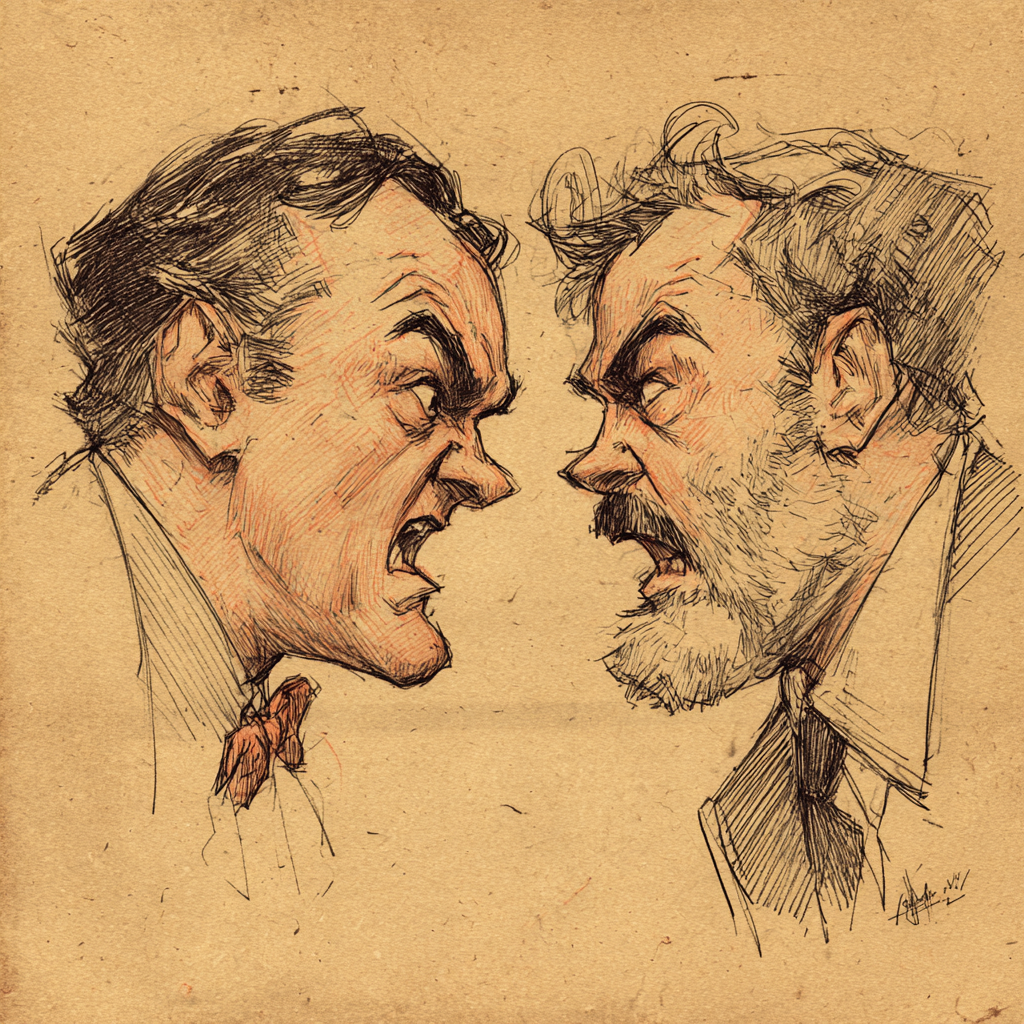
Original illustration by Chasen Smoke
Awards season is well and truly upon us, and that got our resident Tomatometer critics thinking a bit more about Paul Thomas Anderson, a modern master who remains strangely undecorated by major awards that aren’t from critics groups.
With five Academy Award nominations and zero wins, Anderson’s delay in receipt of an Oscar or a Golden Globe gives the awards-season acclaim building behind “One Battle After Another” the strange flavor of a comeback. Pretty odd for a relatively young 55-year-old creator, whose work has been acclaimed virtually from the start. Will Oscars arrive, and will they at last launch him to the absolute pinnacle of American filmmakers of his time?
We got to thinking:
PTA might have to crawl over at least one motor-mouthed maker who many think got there first….
RAY GREENE: Well Wade, it’s finally happening. The critics groups are weighing in, the Golden Globe nominees have announced, and Paul Thomas Anderson is starting to look like he may actually grab some major awards this year – something he HAS NEVER MANAGED TO DO unless you count critics groups and a single BAFTA for screenwriting “Licorice Pizza.” PTA has no Oscars at all, despite an encroaching status as the GOAT of his generation (GOATOHG?). Hell, he hasn’t even gotten a Golden Globe yet, and they pass those out like free popcorn at a kids matinee.
If “One Battle After Another” pulls in the string of gold it seems poised to, Anderson’s maybe about to surpass his frenemy Quentin Tarantino as THE American filmmaker of what I think of as the Second New Hollywood Generation. Those are the makers who came of age in the 1990s, after Jim Jarmusch, Spike Lee and Steven Soderbergh carved a new pathway through the film festivals and straight into an indie distribution renaissance, led by Miramax at its most rampant, which allowed for auteurist works of verve and vision to be created in undiluted form and widely seen.
Quentin seems to know this is PT’s year – it’s hard to view his recent bushwhacking and bizarre attack on Paul Dano and “There Will Be Blood” through any other lens for me. They are genuinely close, but at the same time I think QT has had an intriguing competitive relationship with PTA. He has called “There Will Be Blood” a wake up call that forced him to raise his game. And PTA is someone whom Quentin frequently praises, but as far as I know they have only made a meaningful public appearance together twice– both times for interviews promoting Tarantino films! Which PTA seems to have been glad to do.
So it did get me thinking…
If the Oscars telecast were preceded by a cage match between Quentin Tarantino and Paul Thomas Anderson, with the outcome determined not by raw violence (Quentin wins that one hands down) but by cinematic accomplishment, how would it go?
If the Oscars were preceded by a cage match between Quentin Tarantino and Paul Thomas Anderson, how would it go?
And let me add, I know both esteemed filmmakers would hate that idea, but they both seem to have robust sense of humors. So let’s go.
WADE MAJOR: Sure, let’s go.
RAY GREENE: For me the thing about PTA is that he’s painting on a great big American canvas, and he’s virtually alone in doing it. We’ve become so fragmented as a nation that most of our movies are either so generic as to be weightless (Marvel) or the scale of their ambition is to successfully present a pocket climate, like the one Bruce Dern tends to in “Silent Running,” and then pass it off as a whole world (“Anora”). There’s a breadth to Anderson’s work nobody else even seems to see as available to them any more, and they become even more interesting in aggregate than as individual works. If you watch “There Will Be Blood,” “The Master,” “Licorice Pizza” and “Boogie Nights” in that chronolgical-by-period order, you will get a sequence of Polaroid snapshots of American culture that is restless, seething, multi-faceted, and terrifying, as well as intermittently hilarious. Who else is doing that? Not Quentin, who’s locked in a funhouse built from the grindhouses and video stores of his childhood.
It’s a weirdly optimistic exercise, because ultimately Anderson says America is still discernible if not knowable, that unironic laughter is the pathway to wisdom, and also survival, even if maybe you’re on a careening bus without brakes rocketing down a hill while you notice there isn’t a driver. And the shagginess is intended, and embraced, because this is a shaggy country, with rough edges fading off into ellipses, and only the barest semblance of an agreed upon meaning to anchor it down.
WADE MAJOR: I’m not in total disagreement though I think I give him a bit less credit than you do and I give Quentin a lot more. I think they’re closer to each other than not. They’re both operating on a kind of Gen-X nostalgia to which I totally relate. I love “Licorice Pizza” and “Once Upon a Time in Hollywood” for a lot of the same reasons. But also because I recognize that they are both regional filmmakers. They sandwich me — PT is in love with the San Fernando Valley and Quentin is in love with the South Bay. “Boogie Nights” and “Licorice Pizza” are total love letters to the SFV. And “Jackie Brown” and “Pulp Fiction” are total love letters to the South Bay. As much as anything that Spike and Woody did for New York or what Levinson did for Baltimore. And I really love that. There aren’t a ton of local boys who pay tribute to LA. Though “La La Land” may be the tops of them all.
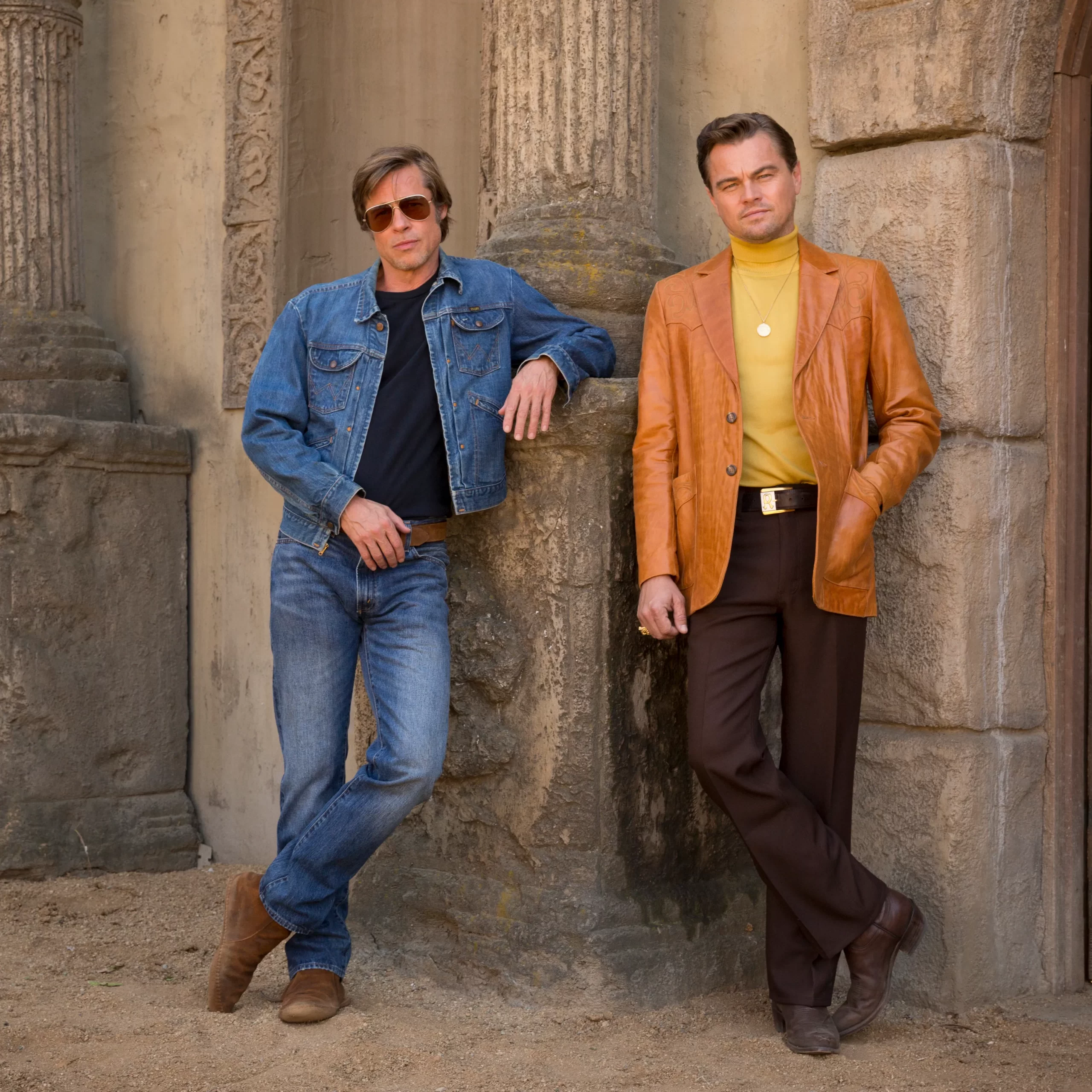
“Once Upon a Time in Quentinville…”
RAY GREENE: For me, Quentin’s films are mostly glib and shallow and none of the people — not one — is to be taken all that seriously as a human being. They’re puppet shows, grounded in an undigested love of vivid content experienced early that most people (and almost all artists) grow out of instead of making it into a cottage industry. It’s useful to compare him to someone like Spielberg, a filmmaker Quentin and I both revere. Spielberg is also informed by his early movie loves. But the first time he addressed them was in “Close Encounters” — a weird movie structurally, informed at an almost painful-to-watch level by the baffled emotions of the wounded teenager Spielberg was when his parents split up. He STARTED knowing the difference between art and schlock, and he’s always wrestled with his prodigious commercial gifts to find a space for human stuff Tarantino doesn’t even acknowledge the existence of most of the time. Spielberg and Anderson know something Tarantino would probably actively refute: that if you’re making stuff that’s entertaining but isn’t capable in part of housing life as it’s lived and something resembling the actual human experience, that is not great dramatic art.
I’m being a little unfair of course, because there are a handful of moments in Tarantino’s films where he is capable of a more complicated form of empathy — I’m thinking of the DiCaprio character in OUATIH and his growing awareness his career is evaporating, and some of the maternal emotion in the late stages of the “Kill Bill” saga. But they’re mostly an inflection to create a two-dimensional illusion of depth, and they often pass by as quickly as the logline emotional content of the average Pixar movie, on the way to the referencing of old media, or the action stuff, which in Tarantino means a bloodbath of cartoon vengeance (always vengeance). Every Tarantino movie is about that most movie-ish of conceits: violent personal revenge. Not one PT Anderson movie is. In fact, I can’t even think of an act of “revenge” in the movie sense of the term in any of PT Anderson movies. Maybe the death of Sam Jackson in “Hard Eight,” but even there, I’d argue that’s more like police work than vengeance, with Philip Baker Hall doing what he must to protect the unworthy surrogate son he loves.
With PT Anderson all that human stuff is what fascinates him. His movies BRISTLE with life — its randomness, its beauty, its horrors, and maybe best of all its ambiguities. That’s what he came for. It’s what I come for too.
So for me, Anderson and Tarantino aren’t in the same league as creators, and they don’t really belong in the same sentence, except generationally and regionally (the L.A. Grit thing), which are legitimate ways of cataloguing them but not the most salient ones.
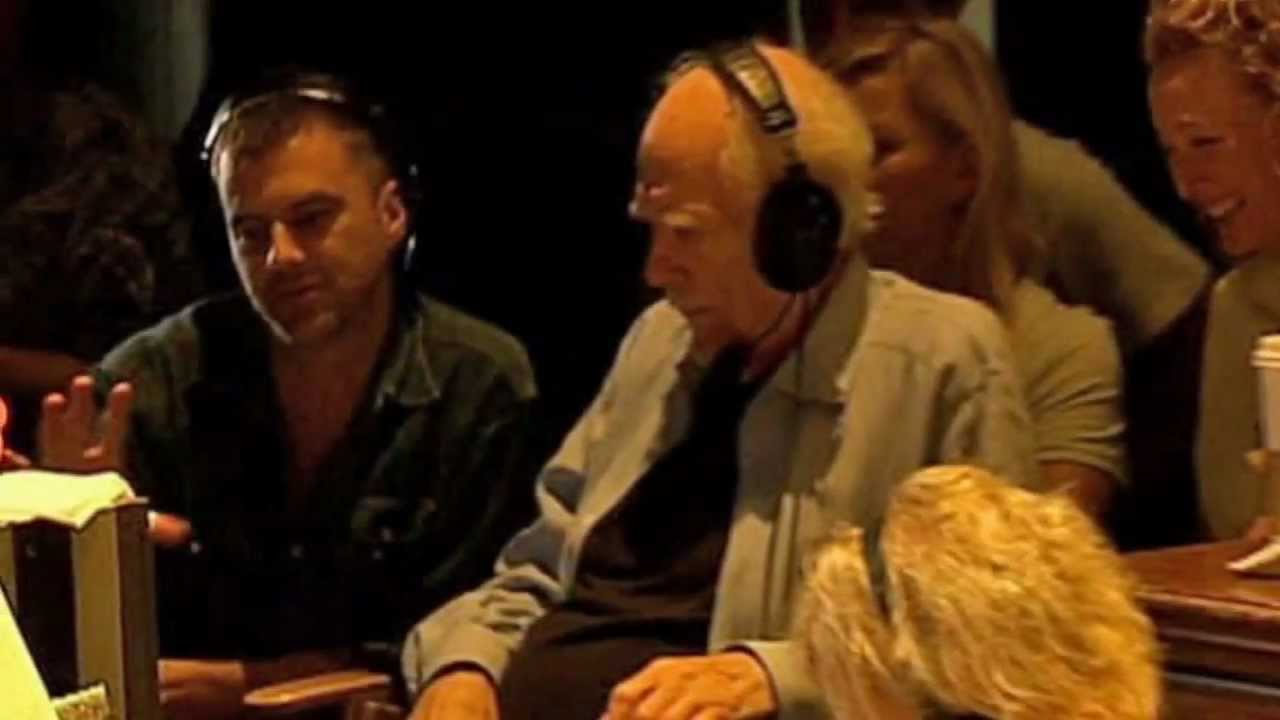
Paul Thomas Anderson on set with Robert Altman.
WADE MAJOR: I don’t know. I think “Jackie Brown” — obviously inheriting a great deal from the source material — is rich with character depth. Same with OUATIH. I think QUENTIN believes they’re all to be taken seriously as human beings — and if you put yourself in his shoes and his worldview, he’s just as fascinated by humanity as PT Anderson. He just doesn’t see humanity quite the same way. But neither did Kubrick. I think an apt analogy is that QT and PTA would both attend the very same banquet — but PTA would focus on the meal while QT would obsess over the decor. By the end of the meal, however, I think both of them would be more preoccupied with the actual people. Even though one would ask them what they thought of the meal while the other would be asking them to pose for a photo against the decor… for posterity.
That said — a film like “Boogie Nights” and a film like “Pulp Fiction” have tons of common DNA. Yes, some people see humans as deeper and more complex — we get that in “There Will Be Blood,” which wrestles with many of the same things QT celebrates in cartoon-like fashion in the “Kill Bill” movies or “Django” or “Inglourious Basterds.” But I don’t think that means QT is less interested in humanity. I just think he sees us as a bit too full of ourselves. Or maybe not as important as we think we are. And I don’t really need to Ingmar Bergman my John Woo any more than I need to John Woo my Ingmar Bergman. Love ‘em both. In their spheres.
RAY GREENE: “Jackie Brown” has always seemed overrated to me. There’s a lot of mid-life sighing going on which I guess Elmore Leonard contributed. But a lot of its emotional impact comes from seeing under-appreciated actors get to strut in the sun — Pam Grier obviously, but also Robert Forster — and that derives from Quentin’s videophile instincts, not really from the movie per se — if those characters were on Bill Holden’s famous “torpedo boat” from “Sunset Blvd.” the effect would be the same. Every other character is a device. I don’t even remember what De Niro does in the movie, or Bridget Fonda, but I remember it wasn’t much. And you really really seem like you’re stretching when you follow an excellent point differentiating “There Will Be Blood” from the cartoonery of “Django” and “Kill Bill” by saying “that doesn’t mean Quentin is less interested in humanity.” Of course it does. In “Django” he’s self-consciously concocting a character based on an icon of spaghetti western lore, and then dropping him into a counter-historical “revenge” narrative because “revenge” is what Quentin does. How much room is left for the random stuff of human behavior in a formula like that?
“Kill Bill” is even more concerned with being iconic as opposed to human. She’s “The Bride,” as if she was a Marvel superhero. She’s wearing Bruce Lee’s pajamas. Her big fight scenes are loaded with action borrowed from Quentin’s favorite Hong Kong and martial arts stuff. The asian school-girl from “Battle Royale” even has a fight scene. And even the most widely quoted “insight” from the movie — when Bill tells the Bride that Superman is the one hero whose human identity is what he puts on when he goes into the world, where he has to cover himself in our weaknesses to be one of us — is taken almost verbatim from Jules Pfeiffer’s survey of Golden Age comic books “The Great Comic Book Heroes.”
For Quentin, there’s good people and there’s bad people, and the good people get to win and the bad people get punished. For all the verbosity and indie cinema inflections in his work, that puts him four square in the same column as all the less personable commercial fodder he supposedly transcends. And that may be the answer to why he’s so popular right there: because he isn’t a radical departure from the mainstream, except in syntax and in the force of his preoccupations with the garbage cinema of yore. The people who make crap can recognize that he’s ennobling crap. The people who like crap can feel elevated in their tastes. I like crap as you know. But I also do my best to recognize when I’m liking crap without needing to call it platinum earrings from Tiffany’s.
I don’t know what to expect next from Paul Thomas Anderson. I always know what to expect from Quentin — as you may remember, I said to you on the day the premise to “Once Upon a Time in Hollywood” was announced that he was probably going to punish the Manson Family and let Sharon Tate live, like he did with Hitler in his previous “historical” movie. With Quentin, it’s a formula, driven by certain cinematic fetishes (and some other kinds) and by his Trump-like need to constantly assert his own greatness in public. With Anderson it’s a fascination with the human condition — one that asks as many questions as it answers — and it evolves over time.
PS – Great line about Ingmar Bergman-ing your John Woo, although Quentin is so close to John Woo and PT Anderson is so far away from Ingmar Bergman that I’m not sure if it applies.
WADE MAJOR: Yeah, I was riffing — couldn’t come up with a better analogy. PTA’s so unique and distinctive, he really doesn’t compare to anyone else.
But see, I see something much more all enveloping in both Quentin’s revisionism of the Hitler and Manson narratives — I see him redeeming Polanski. In “Basterds” he saves Polanski’s parents, however attenuated the intimation. In OUATIH, he saves his wife and unborn child. I’m just saying I don’t think Quentin sees “iconic” as opposed to “human.” To paraphrase how David Lean described the different writing styles of Robert Bolt vs. Christopher Hampton, I think Quentin sees humanity in primary colors. I think PT sees humanity in pastels. I don’t think either is necessarily right or wrong.
If there’s a flaw to that approach with PT, it’s that movies like “There Will be Blood” and “One Battle After Another” just kind of meander all over creation. And it’s fascinating meandering. I never know where I’m going — but at times I’m not sure he does, either. The flaw on Quentin’s part is similar to the flaw in Spike Lee — he wants to grab too much at once and never let it end. Half of Spike’s films are really two movies. But he’s so damn impatient and such a dynamo that he couldn’t make those two, separate, equally great movies — he had to mash them together into “Jungle Fever.” Or any number of others. Quentin actually chose to NOT mash them together and turned them into the two part “Kill Bill,” only the problem is they still don’t work together. Love the first one. Can’t stand the second. But respect the effort. And you’re not wrong — PTA is fascinated with the human condition — as a metaphysical matter. Quentin is equally fascinated — as an aesthetic matter.
RAY GREENE: If Quentin did go out of his way to “save” Polanski in two of his movies, I think you’re proving my point not yours. Polanski is a cipher in both films (I don’t even know where he is in “Inglorious Basterds” but I’ll take your word for it, or that his parents are there.) So that’s just fanboy stuff. Like giving the girl from “Battle Royale” a fight scene in “Kill Bill.” It adds nothing but a reference, and maybe makes a reprehensible and deservedly disliked person feel better about himself for a minute.
re: “Anderson doesn’t compare to anybody…” I would say he compares to Robert Altman, and he’d probably be happy to agree. Not to be too reductive, but to a degree “Magnolia” is Anderson’s “Nashville,” and so (to a degree) is “Boogie Nights.” “There Will Be Blood” is his “McCabe and Mrs. Miller.” “Inherent Vice” is his “The Long Goodbye.” “Hard Eight” is his “California Split.” And then there’s the celebration of spontaneity and controlled improvisation we see in his films, something Altman was also famed for. People forget this, but when Altman’s heart transplant was failing, and he wanted to do another film, the insurance company said they’d only do it if there was another director ON SET, ready to takeover at a moment’s notice. And guess who Altman turned to, and who was there on “Prairie Home Companion” every day, observing his hero’s last hurrah?
Paul Thomas Anderson.
WADE MAJOR: Really interesting analogies. When you put it that way — I can see it. But it only gets me so far. Perhaps because with Altman I always felt like I was getting a little spoonful of sugar with a drop of bile. He’s kind of a joyous cynic in so many ways. I don’t get the impression that PT is much of a cynic or all that joyous. His visual style is certainly not at all like Altman’s. But I see where others can see that.
RAY GREENE: The biggest difference between their visual style is that Altman favored the long lens and PT favors the wide one. The other big difference is that with Altman, you’re talking about a director with a prodigious self-awareness, who could seem to be operating in a shapeless way and then shock you with the formal discipline he arrived at. I know. I worked with him on “Tanner 88” for three days, and the back of my head is in a coupla shots in “Episode 7: The Great Escape.” Fascinating to watch him at work, and to have him spontaneously “cast” me in a handful of shots. I even got to improv a scene with Pamela Reed that didn’t make the cut. With all my film school master-scene nonsense in my head, the entire shoot seemed chaotic and formless to me. But it came together beautifully. PT is another director who is okay at times with formlessness — it’s just another effect available to him. And it all comes together in the end, and is shockingly alive when it does.
WADE MAJOR: I think that’s right, though PT also has Quentin’s penchant for stylistic homage. “Boogie Nights,” “There Will be Blood” and “The Master” are filled with them. But then he’ll pull out something like “Punchdrunk Love” and you think, “Where did that come from? And why doesn’t he shoot all his movies that way?”
RAY GREENE: We haven’t really decided anything, except that you like Quentin a lot and I like Paul Thomas Anderson a lot (plus Robert Altman. And not for nothing Tarantino, who celebrates Tobe Hooper as a genius, despises Altman, whom he once called “a fucking pothead who doesn’t know any fucking better.”).
It’s up to the 2025/2026 awards season to do the rest.