
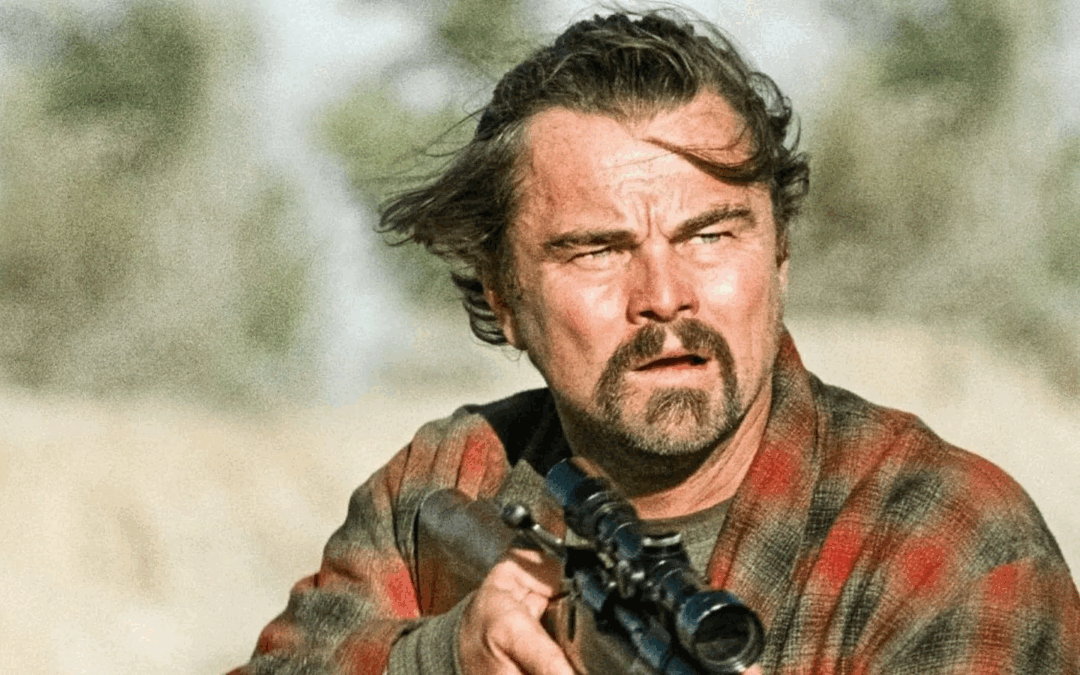
“One Battle After Another” just hit theaters to critical acclaim and so so box office, sustaining Paul Thomas Anderson’s reputation as one of the true cinema masters of his generation, albeit a creator who seems as ever to cater primarily to minority tastes.
So we asked, in this moment, when Anderson’s accumulated legacy of great and/or risk-taking work almost demands a reckoning, has Paul Thomas Anderson ever been a viable commercial proposition? Philistines that we are, we decided to focus on the commerce side of what is unquestionably a major cinematic legacy.
It all began as an email from Tim Cogshell about the opening weekend of “One Battle After Another…”
TIM COGSHELL: “One Battle…” Heaps of critical praise and 22 mil North American box office. Is that good?
WADE MAJOR: I would say it’s guardedly good. But here’s the problem — the budget was $130–175 million. Which I find ASTOUNDING. That money is NOT on the screen. If that’s true, it’s insane. They could have made that movie for $35m. Same movie.
So it’s going to lose money. A lot of money. Because it opened on 3600 screens — it should have done better. It’s simply not an interesting subject to people.
But… the fact that an art house indie got a studio wide release into that many screens — purely on the alleged strength of DiCaprio (who has never been a box office draw — his “stardom” is negligent, his “celebrity” is off the chart — not the same thing) — that bodes well. It shows there’s a larger audience for these movies than people pretend. They just need to be able to generate the same ticket sales in fewer screens with a much lower budget. Make that movie for $35m, release it into 800 screens and come back with $22m?
Now we’re talking.
I”m glad it got there — but it had to work too hard and spend too much money to get there.
RAY GREENE: I kinda agree. Even though he’s the better filmmaker, the PT Anderson cult has never achieved that commercial scalability the Tarantino cult has maintained unwaveringly since “Pulp Fiction.”
Their one hope is if this is PT Anderson’s year at the Oscars. That could give the movie a second wind, so long as there’s no plan to dump it to streaming too soon.
I think this also indicates something I’ve thought for awhile, which is that Leo DiCaprio is waning. He used to be able to open gobblers like “The Beach” and “Gangs of New York.” Now he can’t even open a GOOD movie.
WADE MAJOR: Leo has never opened anything, really. He’s great for generating publicity. But he’s never had Brad Pitt or Tom Cruise level DRAW. He’s never even had George Clooney level draw.
He gets you magazine covers, is what he does.
RAY GREENE: I strongly disagree. The fricking REVENANT opened to 38 million fer chrissakes, the equivalent of 52 million today. SHUTTER ISLAND opened to 40.2 million, equivalent to 60 million today. That same year INCEPTION opened to 62.8 million, equal to 93.6 million today.
Those are tough movies and the only thing they had going for them on opening weekend was Leo on the poster (okay INCEPTION had Christopher Nolan, but c’mon, that’s a cult draw, even moreso back then). ONE BATTLE is a romp in comparison.
And by the way, Brad Pitt is much much less of a box office golden boy than you think he is. He bats under .500 when it comes to opening a movie.
TIM COGSHELL: Leo and Pitt never put on the Tights and Capes, so their numbers were doomed from the get-go.
But, Tom Cruise didn’t either — though one might say the MIPs are superhero movies of a sort.
Anywho, “One Battle” felt like the machine making a good movie, and doing “money losing” numbers, in the hope they have a like a “great movie,” capable of cleaning up at the box office. The jury is out.
Here are the BoMojo numbers for “Licorice Pizza” – its budget was 40 million – promotion not accounted for. I’m pretty sure it was a flop – too.
DOMESTIC (52%); $17,318,007. INTERNATIONAL: 15,958,068. TOTAL: 33,276,075.
MARK KEIZER: I’m going to stupidly give Warner Bros. enough credit to assume that they’ve run the numbers and think that OBAA will eventually climb its way up into the black (or they’ll be fine with a marginal loss if it takes home Oscar gold). How it’ll do that is anyone’s guess. The Blu-ray era is over and I doubt the film will motivate anyone to sign onto HBO Max. They presumably assume that awards buzz will give the film a longer tail, Leo will entice late-comers to check it out, and overseas returns will be robust enough. But none of that is my problem.
My problem is that, while WB has wasted more money on lesser movies, this particular movie, by virtue of being PTA’s biggest-budgeted film by about 400%, will be disproportionately judged on its box office performance. And while that’s not fair, I agree with Wade; this movie should not have cost $130M. Even if it is one of PTA’s bigger physical productions. And yes, I’ll say it: I’m going to assume that a nice chunk of that dough went to Leo, who should not have asked the studio to meet his quote. He may have assumed, “OBAA needs me more than I need OBAA” but dude, take a haircut on your rate and help a filmmaker doing a huge budget-upscale prove he can make the money back.
WADE MAJOR: Was Leo in “Inception”? Wow. Shows how much I remember. I just remember being annoyed by that movie. I don’t even remember who was in it or what it was about.
I stand corrected then — funny, I don’t think of “The Revenant” as being successful, but I guess it was. Same with “Shutter Island.” I just focus on things like “Blood Diamond” and “Body of Lies” and “J. Edgar,” all of which sucked. But then there’s “Django Unchained” and “The Wolf of Wall Street” and “Once Upon a Time in Hollywood.”
I guess I don’t think of his Tarantino or Scorsese films as HIM. They’re the director’s movies.
But he was the draw. Moreso than Pitt in OUATIH.
And yet… I don’t think of him as a star of the same caliber. I wonder why.
PT is like James Gray. His movies get acclaimed, but rarely make money. He gets them made because actors want to work with him. “The Master” was a huge loser. Budget: $32 million. Box office: $28.3 million. “Inherent Vice” even moreso (Budget: $20 million. Box office: 14.8 million.) Ditto “Punchdrunk Love:” Budget $25 million/gross $24.7 million. With ancillaries, “Phantom Thread” and “Magnolia” probably broke even (they took back fifty percent more than they cost, but remember that’s all split with the theaters). “There Will Be Blood” grossed three times its budget and was a winner. Same for “Boogie Nights.” As hits go, that’s just about it.
The lesson is, his movies are a good bet at $15m to $25m because they stand to make on average around $35m to $48m. With ancillaries, you can make that work. and that’s consistent. But why on earth they handed him more than $100m to make the new film, is a mystery to me. Not because he’s not good for the budget — but the script doesn’t warrant it. There’s more production value in his other movies by far. WHERE DID THEY SPEND THAT MONEY???
RAY GREENE: PT is SO MUCH BETTER than James Gray. James’ idea of a movie is to be so dour the audience has to be defied into liking it, so then you know you’re pure.
WADE MAJOR: Isn’t that weird, though? Because James is NOT dour. James is hilarious. He was born to do comedy. And yet he always goes for brooding. I don’t get it. Actually, here’s the difference — PT, even when he’s not on his game — he’s a writer first and a director second. James is a pure director. But he keeps fancying himself a writer. PT’s movies always have great stuff, even if they occasionally lose their way. James’ movies occasionally have great stuff and wander around too much between those moments.
RAY GREENE: PT is an intellectual who is also an entertainer (much of the time). MYSTIC PIZZA is a FUN movie. BOOGIE NIGHTS is a FUN movie. INHERENT VICE is (for me) a FUN movie. Ditto the new one. Admittedly THE MASTER is a tough (but I think brilliant) movie, and so is PHANTOM THREAD, and so is THERE WILL BE BLOOD (although I think that one is very accessible in the same way something like UNFORGIVEN is). The secret sauce is that he doesn’t think he has to draw a strong line between art and entertainment. He operates in both modes, to whatever degree the story he’s telling needs him to.
MAGNOLIA is just a straight up masterpiece — a fugue on child abuse — and an ensemble film so perfect Robert Altman must have been proud.
I think alongside Spike Lee, PT’s our best creator, at least so long as the Coens aren’t working any more, and PT is still full of drive and ambition in a way those much older creators at times are not.
I also think you don’t think of Leo that way because ever since TITANIC smashed box office records he has tried to always pick the best movie not the biggest commercial machine. And Tim is right, they (him and Pitt) haven’t put on the cape and cowl, which Gosling IS doing basically by headlining a STAR WARS movie.
WADE MAJOR: I tend to be less enamored of the PT films others like, as it happens. “Inherent Vice” and its “stoner noir” bored me. I think the new film is beautifully made but exceedingly weird and unfocused and not really about much of anything. It has so much on its mind that it ends up not really having anything to say. I’m also the loner who thinks “Magnolia” is more ambitious than successful. And “Phantom Thread” — like “There Will Be Blood” — takes a hard turn in the middle and just runs right off the rails. It’s the same problem I have with a lot of Spike’s stuff and Tarantino’s stuff — they all came of age at a time when there were no Irving Thalbergs to tell them, “Cut this. Change the ending.” But I revere “Boogie Nights,” “Licorice Pizza” and “The Master.” Absolutely love all three. “Licorice Pizza” may be my favorite, actually — just because I’ve met Jon Peters — several times — and Bradley Cooper’s coked-out parody version of him sends me into fits of laughter from which I lose all motor control.
RAY GREENE: For me the thing about PT is that he’s painting on a great big American canvas, and he’s virtually alone in doing it. We’ve become so fragmented as a nation that most of our movies are either so generic as to be weightless (Marvel) or the scale of their ambition is to successfully present a pocket climate, like the one Bruce Dern tends to in SILENT RUNNING, and then pass it off as a whole world (ANORA). There’s a breadth to Anderson’s work nobody else even seems to see as available to them any more, and they become even more interesting in aggregate than as individual works.
If you watch THERE WILL BE BLOOD, THE MASTER, LICORICE PIZZA and BOOGIE NIGHTS in that chronological-by-period order, you will get a sequence of Polaroid snapshots of American culture that is restless, seething, multi-faceted, and terrifying, as well as intermittently hilarious. Who else is doing that? Not Quentin, who’s locked in a funhouse built from the grindhouses and video stores of his childhood. Not the Coens, though they come close — for me, and although I love them, the rigid irony of their presentation makes their films a locked in universe almost as much as the Marvel, DC and Star Wars ones. Not Spike because Spike has an urgent need based on the maybe more important mission of filling in with truth the great and distorted hole where Hollywood overlooked or distorted with racial shorthand who everyone other than the majority white population actually was.
It’s a weirdly optimistic exercise, because ultimately Anderson says America is still discernible if not knowable, that unironic laughter is the pathway to wisdom, and also survival, even if maybe you’re on a careening bus without brakes rocketing down a hill while you notice there isn’t a driver. And the shagginess is intended, and embraced, because this is a shaggy country, with rough edges fading off into ellipses, and only the barest semblance of an agreed upon meaning to anchor it down.
I love his stuff.
Amen.